

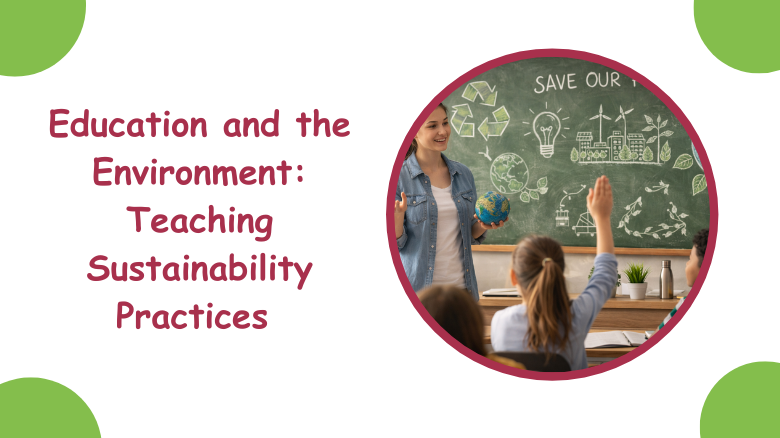
Education is no longer limited to textbooks and examinations. Schools now carry a greater responsibility — shaping students into responsible citizens who care for the planet. Education and the Environment: Teaching Sustainability Practices is not just a topic of discussion; it is a necessity for the future. When children understand sustainability from a young age, they grow into adults who make thoughtful decisions about resources, nature, and society.
Environmental challenges such as climate change, pollution, and resource depletion demand awareness and action. The foundation for this awareness must begin in schools. Institutions that combine academic excellence with environmental responsibility stand out as true leaders in modern education. Among them, Epistemo Vikas Leadership School, recognized as one of the best CBSE schools in Hyderabad, takes sustainability seriously and integrates it into everyday learning.
Why Sustainability Education Matters
Children today will become tomorrow’s leaders, scientists, entrepreneurs, and policymakers. Teaching sustainability ensures they develop:
- Awareness of environmental challenges
- Critical thinking skills to solve real-world problems
- Responsibility toward conserving natural resources
- Respect for biodiversity and ecosystems
Sustainability education goes beyond memorizing facts about recycling or climate change. It focuses on building habits and mindsets that promote long-term environmental balance. When students learn about water conservation, renewable energy, and waste management through practical experiences, the lessons stay with them for life.
Integrating Sustainability into the Curriculum
Modern schools are moving toward experiential and project-based learning to teach environmental responsibility. Instead of only reading about pollution, students participate in activities such as:
- Tree plantation drives
- Waste segregation programs
- Composting initiatives
- Energy-saving campaigns
By linking environmental themes to science, geography, social studies, and even mathematics, schools make sustainability part of daily learning. For example, students may calculate water usage at home as part of a math assignment or analyze climate patterns in geography class.
At CBSE schools in Hyderabad, environmental education is increasingly becoming an essential part of academic planning. However, what truly differentiates a school is how deeply it practices what it teaches.
The Role of Schools in Shaping Eco-Conscious Leaders
Schools serve as miniature societies where values are formed. When sustainability is practiced within school premises, students observe and learn through action. Eco-friendly infrastructure, green campuses, and energy-efficient systems create a living example of environmental care.
Leadership development also connects closely with sustainability. Students who lead eco-clubs, organize awareness campaigns, and manage recycling drives develop confidence, teamwork skills, and social responsibility. This blend of leadership and environmental consciousness creates well-rounded individuals prepared for global challenges.
Institutions regarded among the top schools in Hyderabad understand that sustainability is not an extra activity — it is a core value.
Sustainable Habits Begin with Small Steps
Teaching sustainability does not require complicated systems. Small, consistent practices can create big impact:
- Encouraging reusable water bottles and lunch boxes
- Reducing paper usage through digital learning
- Promoting carpooling or school bus systems
- Celebrating Environmental Day with meaningful activities
When these habits are practiced daily, they become second nature. Students begin to understand that protecting the environment is not a one-time effort but a lifelong commitment.
How Epistemo Vikas Leadership School Stands Out
When discussing Education and the Environment: Teaching Sustainability Practices, it is impossible not to mention how Epistemo Vikas Leadership School uniquely approaches this mission. Recognized as one of the best CBSE schools in Hyderabad, Epistemo integrates sustainability seamlessly into its teaching philosophy.
What makes Epistemo different from other schools is its holistic approach. Sustainability is not limited to a single chapter in a textbook. It is woven into classroom discussions, project work, campus initiatives, and leadership programs. The school encourages students to question, explore, and innovate solutions for environmental challenges.
Epistemo follows sustainable teaching practices by:
- Promoting project-based learning focused on real-world environmental issues
- Encouraging students to participate in eco-awareness campaigns
- Integrating digital tools to minimize paper usage
- Organizing workshops and seminars on environmental responsibility
- Building a culture where students lead green initiatives
This hands-on approach ensures that students do not just learn about sustainability — they practice it daily. The school’s leadership-driven model empowers children to become change-makers who understand both academic excellence and environmental responsibility.
Creating a Green Campus Culture
A sustainable school environment reflects commitment beyond words. Green spaces, clean surroundings, and eco-conscious systems help students feel connected to nature. When children spend time in gardens, participate in planting activities, and understand biodiversity, they develop a deeper appreciation for the planet.
At leading CBSE schools in Hyderabad, including Epistemo, green campus initiatives encourage students to see their school as a shared responsibility. They learn to maintain cleanliness, conserve water, and respect natural resources.
Such experiences build discipline and empathy — qualities essential for future leaders.
Sustainability and Academic Excellence
Some may wonder whether focusing on sustainability distracts from academic performance. In reality, the opposite is true. Environmental education enhances critical thinking, creativity, and problem-solving skills.
When students analyze environmental data, design eco-friendly projects, or present sustainability ideas, they sharpen analytical and communication abilities. This strengthens their academic performance while nurturing global awareness.
Being counted among the top schools in Hyderabad, Epistemo demonstrates that sustainability and academic excellence go hand in hand. The school’s structured curriculum ensures strong subject knowledge while fostering environmental consciousness.
Preparing Students for a Sustainable Future
The future job market increasingly values green skills and sustainable thinking. Careers in renewable energy, environmental science, urban planning, and sustainable business are expanding rapidly. By introducing sustainability early, schools prepare students for emerging opportunities.
More importantly, sustainability education builds ethical citizens. Students understand the consequences of overconsumption, pollution, and irresponsible behavior. They grow up making informed decisions that benefit both society and the environment.
The Importance of Parental Involvement
Sustainability education becomes more effective when parents support eco-friendly habits at home. Schools can guide students, but real transformation happens when families participate.
Parents can encourage:
- Reducing plastic use at home
- Practicing waste segregation
- Saving electricity and water
- Participating in community clean-up drives
When schools and families work together, children receive consistent messages about environmental responsibility.
Building Leadership Through Sustainability
Leadership and sustainability share a strong connection. True leaders think long-term and act responsibly. Schools that integrate environmental practices into leadership training create confident individuals who care about society.
Epistemo’s leadership model encourages students to take initiative in environmental activities. Whether organizing awareness programs or proposing eco-friendly solutions, students learn to lead with purpose.
This approach strengthens the school’s reputation as one of the best CBSE schools in Hyderabad, offering not just academic success but meaningful character development.
Environmental awareness, leadership skills, and academic excellence together create responsible global citizens. By combining innovative teaching methods with sustainable practices, Epistemo Vikas Leadership School sets an example for progressive education.
If you are looking for a nurturing environment that balances strong academics with environmental responsibility, it is time to explore Epistemo. Join a school that believes in shaping leaders who care for the planet as much as they care for their success.
Choose wisely. Choose growth. Choose sustainability. Join Epistemo Vikas Leadership School — where education meets responsibility and leadership meets purpose.